

TL;DR | The Highlights
- Refining a solution makes it better, but comparing different approaches first helps teams understand the trade-offs behind each one.
- Giving the same problem to mixed-role groups creates opportunities to challenge assumptions and learn from perspectives beyond your own expertise.
- Thought leadership is about more than having an opinion. It’s the ability to make an informed recommendation and explain why it makes sense when reasonable alternatives exist.
- Presenting to peers who solved the same problem differently builds the soft skills that matter in consulting: clear communication, active listening, constructive disagreement, and the confidence to change your mind.
- Any team can put this into practice by giving its next meaningful challenge to smaller groups before committing to a solution.
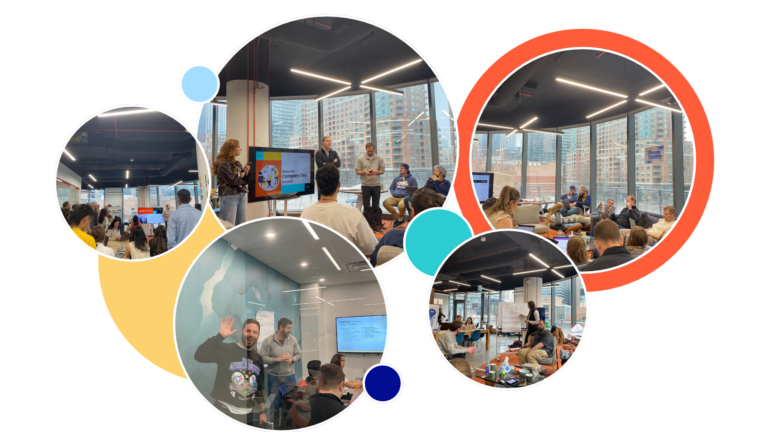
At Lane Four, Company Day works like this. We give the team a problem, split into mixed groups of consultants, developers and architects, and each group works through it and presents its solution. We’ve written before about how gamifying problem solving keeps our team agile. But there’s another reason we value these exercises, and it has less to do with the solutions themselves, and more about the people developing them. It’s an opportunity to build the judgment, confidence, and communication skills that make someone a great consultant.
Think about how most business problems get solved. A challenge is assigned to a person or team, they develop a recommendation, and that recommendation goes through rounds of feedback and refinement. Often, the result is a perfectly good solution.
But when everyone is working from the same initial idea, how often do we stop to consider what a completely different approach might have offered? That’s where solving the same problem more than once becomes valuable.
Refining an Answer Is Different From Comparing Answers
Iteration is a necessary part of good consulting. Whether you’re redesigning a lead-routing process or implementing a new forecasting methodology, the first version of a solution is rarely the final one. Teams review, challenge, and improve their work. Each round helps address gaps, refine details, and strengthen the recommendation. But refining one answer isn’t quite the same as comparing several.
Once an initial direction has been established, subsequent discussions naturally tend to build on it. The assumptions behind that first recommendation can carry through each revision, even when other approaches might be equally reasonable.
Maybe the team prioritized speed over scalability. Maybe they chose a familiar configuration rather than exploring a different process. Neither choice is inherently wrong, but each involves a trade-off. And those trade-offs become easier to recognize when there’s another solution sitting beside the first.
That’s what we get from having multiple groups tackle the same challenge independently, and practice this internally on a regular basis. Rather than simply improving one approach, we create an opportunity to question the thinking behind several.
Same Brief, Different Recommendations
One of the most interesting parts of our Company Days is seeing how differently people approach the exact same problem. Put the same problem in front of three groups and that inheritance breaks. Each group starts from scratch with its own instincts. A consultant might start from what the business needs to see on Monday. A developer may think about what still holds up when volume doubles, while an architect is likely to ask how it fits with everything else in the org.
Imagine a familiar RevOps brief: inbound leads are taking too long to reach the right sales reps.
One group might recommend optimizing the existing assignment rules. It’s a relatively quick change that addresses the immediate issue without disrupting the broader process. Another might propose redesigning routing around territories and account ownership, creating a more scalable structure that better reflects how the sales organization operates. A third might question whether routing is actually the problem. What if leads are assigned correctly, but unclear ownership during the handoff is causing the delay?
All three approaches could be valid. But they prioritize different things, require different levels of effort, and solve slightly different versions of the problem. Seeing them side by side changes the conversation. Instead of debating whether one solution works, the team starts discussing why one approach might be more appropriate than another. And that’s where the real learning begins; especially with newer team members. People are exposed to considerations they might not have identified themselves, and they’re challenged to think beyond their own first instincts.
Thought Leadership Is a Recommendation You Can Defend
Thought leadership is often associated with publishing content, speaking at events, or sharing an expert opinion. But before someone can communicate a valuable perspective externally, they need to develop the ability to form one. In consulting, that means being willing to make a recommendation, explain the reasoning behind it, and stand behind that decision when reasonable alternatives exist.
It’s easy to present a client with three options and explain that each has its advantages. It’s harder, and often more valuable, to say, “Given your priorities and constraints, here’s what we recommend, and here’s why.” That requires more than technical knowledge. It requires judgment.
When our teams present their solutions let’s say, on Company Day, they aren’t just explaining what they’ve built or proposed. They’re also explaining the decisions that got them there. Why did they prioritize one requirement over another? What alternatives did they consider? What would they do differently if the circumstances changed? And when another group presents a completely different approach, they’re challenged to consider whether their original reasoning still holds up.
Comparing answers builds that ability in a way solo work doesn’t. When your group’s recommendation sits next to two others, “it depends” stops being an option. You have to name what your approach does best and what it costs (in time, effort, and budget), then explain why that cost is worth paying for this particular business.
That habit carries into client work. A consultant who has defended a choice against real alternatives tends to bring a recommendation to the table instead of a menu of options, and senior leaders will feel the difference.
The Toughest Audience Is the Team That Solved It Differently
Standing up to present during internal sessions (whether in a hands-on workshop at Company Day or a collaborative scenario in a Women in Tech group), is harder than it sounds. Presenting your solution to colleagues is one thing. Presenting it to colleagues who have just spent the same amount of time solving the exact same problem is another.
They know where the difficult decisions are. They’ve considered the constraints. And there’s a good chance they’ve reached a different conclusion. That makes for some interesting conversations. You have to explain your thinking clearly enough that others can follow it. You have to listen when someone challenges an assumption, respond without getting defensive, and recognize when another group has identified something you missed. Sometimes, the best outcome is realizing that someone else’s idea is better than your own.
These are the kinds of skills we often group under the label of soft skills. But in consulting, they’re anything but secondary.
Think about what happens when a CRO questions a recommendation, a technical stakeholder raises concerns about scalability, or a client’s internal team has already tried something similar without success. Knowing the technology is important. So is being able to navigate those conversations, understand the concerns behind a question, and explain your recommendation in a way that builds confidence.
Those abilities aren’t developed through technical certifications alone. They grow through practice, feedback, and experience working with people who don’t always see things the same way.
Company Day gives our team a space to practice those conversations with colleagues, where the stakes are lower but the questions can be just as challenging. And because our teams work across different disciplines, people also get to learn how their colleagues think, communicate, and approach problems. That makes us stronger collaborators internally and better partners to the clients we work with.
You Don’t Need a Company Day to Start
While our internal Company Day gives us a dedicated opportunity to practice these skills, the same approach can work on a much smaller scale. The next time your RevOps team faces a meaningful decision with more than one reasonable solution, try changing how you approach it:
- Give the same problem to two or three small groups. Mix roles and experiences where possible to bring different perspectives into the conversation.
- Set a short time limit. The goal is to develop a recommendation, not spend weeks perfecting a solution.
- Ask each group to explain its trade-offs. What did they prioritize? What did they choose not to do, and why?
- Compare the recommendations before deciding. Encourage questions, constructive disagreement, and the opportunity to build on another group’s thinking.
You don’t necessarily need to combine the solutions to make the exercise worthwhile. Sometimes, the strongest outcome is someone changing their mind after hearing another perspective, or a team gaining a clearer understanding of why its original recommendation makes the most sense.
The important part is being able to explain that decision. Of course, not every problem warrants this level of discussion. Save it for decisions where the trade-offs matter, whether that’s a new routing process, a forecasting methodology, or a change to how your sales team manages its pipeline. Pick one meaningful decision your team is about to make, and try solving it more than one way before you commit.
At Lane Four, it’s a habit we build together through Company Day, and one that helps shape how we collaborate, challenge each other, and approach the problems our clients bring us.
If you’re weighing a decision with more than one reasonable answer, we’d be glad to think it through with you. Let’s chat.
Let's chat!
